
SLOW MOHS SURGERY STAGED EXCISION in Richmond va
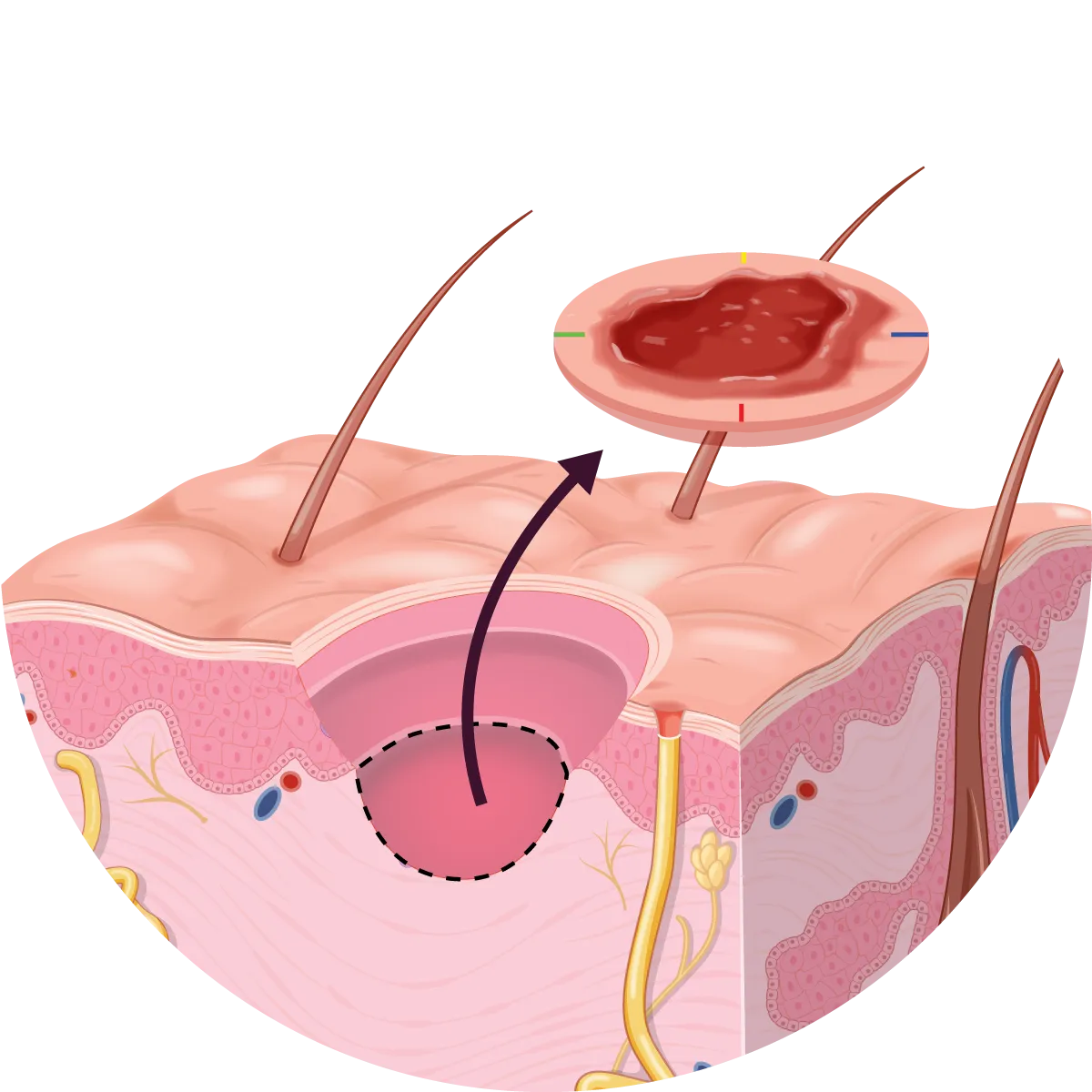
Slow Mohs, also called staged excision, is a surgical technique used to remove certain melanomas while carefully checking that all cancer cells are gone. Unlike traditional Mohs surgery (used for other skin cancers), melanoma tissue requires special processing that takes longer—usually 1 day per stage—hence the term “slow” Mohs.
This method allows Dr. Wallace and the pathologist to:
- Remove the melanoma completely
- Preserve as much healthy skin as possible
- Carefully examine all of the surgical margins (both deep and peripheral
Why is Slow Mohs Used for Melanoma?
Slow Mohs is often recommended for melanomas:
- On the face, ears, hands, feet, or other cosmetically or functionally important areas
- With ill-defined borders
- That are melanoma in situ or selected early invasive melanomas
- That have recurred after prior treatment
The goal is complete cancer removal with the best cosmetic and functional outcome
How Is the Procedure Performed?
-
Stage 1 – Removal of Visible Tumor
- The melanoma and a thin margin of surrounding skin are removed.
- The wound is temporarily bandaged (not closed right away).
-
Tissue Processing
- The removed tissue is sent to a specialized laboratory in Charlottesville, VA the same day.
- The tissue is processed with permanent sections and special stains to detect melanoma cells over the next 12-18 hours.
- This analysis and final result typically takes ~24 hours.
- The pathologist calls Dr. Wallace to notify him if margins are clear or if more melanoma cells are present.
-
Results and Next Steps
- If margins are clear, reconstruction or wound closure is scheduled.
- If melanoma cells are still present, another stage is performed to remove additional tissue only where needed.

How Many Visits Are Needed?
- Most patients need 2 visits, sometimes more than two are required if the first stage or subsequent stages are positive
- Visits may occur over several days
- Final repair may be done the same day margins are clear or at a later appointment
Benefits of Slow Mohs
- Highest level of margin control (high cure rates)
- Reduces the chance of melanoma recurrence
- Preserves healthy tissue
- Ideal for sensitive or visible areas
Risks and Side Effects
- As with any surgery, risks may include:
- Bleeding or bruising
- Infection
- Scarring
- Temporary swelling or numbness
- Need for additional stages or repair
Your surgical team will review your specific risks with you
What Should I Expect Between Stages?
- You will have a temporary dressing
- Mild discomfort is common and controlled with over-the-counter medication
- Avoid strenuous activity until cleared by your provider
- Keep the bandage clean and dry unless instructed otherwise
After the Final Repair
• You will receive wound care instructions
• Stitches may be removed at a follow-up visit (when we can we place dissolving
sutures)
• Long-term skin checks are important, as melanoma patients have a higher risk of
developing future skin cancers
When to Call the Office
Contact us if you experience
- Increasing pain, redness, or swelling
- Bleeding that does not stop with pressure
- Fever or chills
- Concerns about your wound or dressing